
For a Different Academia
Reflection #4: Why Pedagogy & Theory aren't opposed

As a Master’s student at the moment, I have begun to give in to a little pessimism about the future of careers in academia. From almost all sides, I am being told to start prepping skills that can be made useful in a profitable industry as the academia job market starts to collapse. Many others in a similar position to myself have considered it like Tony’s monologue in the pilot of The Sopranos about how it feels like he “came in at the end, the best is over.” While academia may not be the most comparable to the mafia, its hard to shake off the feeling the speech evokes that all the skills I’m learning, all the possibilities for thought I saw in the academics and philosophers of the past, and the expanse of what education and teaching could be are no longer for me; I’m just here to watch it crumble.
Still, I would like to at least have the hope that its not all over, that if we get the politics right, then the total destruction of education and academia won’t happen, but will be narrowly saved. Academia’s demise, however, isn’t coming from a natural evolution away from the institution as the site of education; its demise will be akin to murder, and its non-existence will amount to the destruction of access to higher education for most people. While there are para-academic organizations, and I try to participate in a few, they are not wide-reaching enough yet to offer a humanities education to the hundreds of thousands of people who annually seek it through the university system. This destruction of humanities education seems to be the primary aim of the murderers of academia: big businesses get to turn college into a free training program, the right gets more ignorant masses that unquestionably follow their power and religious doctrine, and now AI companies get to be seen as the route to education for all (“at a metered rate” as Sam Altman now says), despite how often these AIs are biased and massively incorrect.
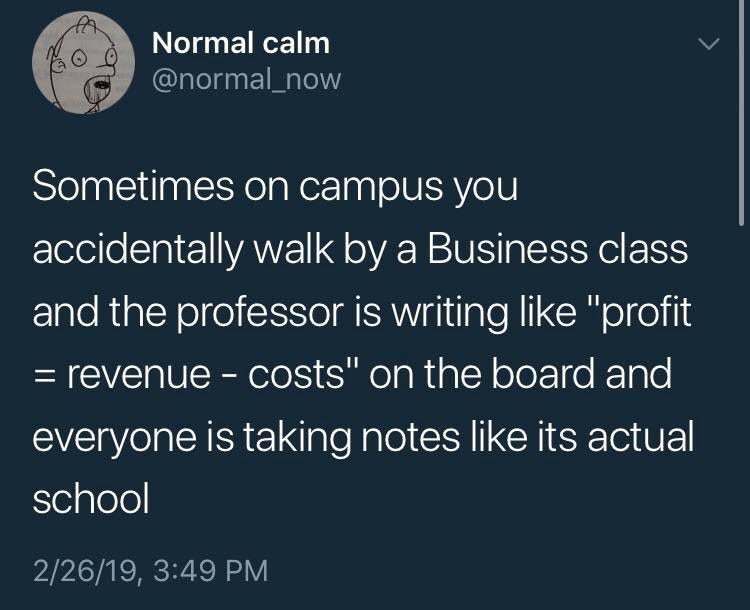
If these interests are to be totally defeated and not allowed to return, Academia itself will have to fundamentally change. The first of these three interests has seemingly won the space of academia and has degraded it into a job training site in almost any field in most universities around the US, the colleges meant for the children of rich white people being possibly the only exception. The view of what knowledge and education are has become antithetical to the best ideals of higher education: critical thinking skills and exploratory/experimental research. It is no longer a place meant to give students a place to grow their metacognition skills, but a 4-year mill for people to find lifelong careers through skill-only based learning, internships, and connections. The jobs that are growing in the space are the ones that fill the needs of these specific aims; the humanities are protected mostly by general education requirements and, because of this, are seen as basic college-level skills courses rather than fields that should lead to lifelong research. What then must academia become?
What Academia could be, with education and knowledge as ends in-themselves, is an experimental institution. It was this vision, which once existed in the past, especially in countries like France, that inspired me to want to pursue a career in academia. I used to look at the requirements of a new, and possibly even public, course every year about your current research done by such notable figures like Foucault and Lacan, as the ultimate academic dream. Experimental, groundbreaking research and theory were seen as part of the job, and its presentation was treated as either a public service or something regular students should be actively engaged in. I found this style of education exciting and worth building a career towards.
Around the same time I first read these figures and learned about the 20th-century French university requirements for their positions, I was reading the final seminar/lecture series done by Mark Fisher at Goldsmiths, University of London: Post-Capitalist Desire. I now find a lot of similarities between the space in which it happened and my current grad school seminar course experiences. While Fisher, as the lecturer and professor for the course, created the reading list/syllabus and spent most of the course’s time lecturing, the voices of the students and their questions are not something taken lightly or as mere clarification questions. This was an upper-level course, but it still shows a seriousness for what the humanities and training in the humanities can bring about in the classroom: the occasional dialogues between Fisher and the students were consistently on deep theoretical questions concerning the texts and their relationship to the world we live in, which made the lectures deeper and richer in meaning than any pre-planned monologue lecture could.
Lately, I’ve been thinking over the debate between pedagogy/teaching and research/theory that seems to have sparked back up on social media. Its an opposition that I find a lot of people in the humanities seem to see as extremes, where obligation to the former makes the latter near impossible to do, and I can’t say I don’t see where they’re coming from. The fields in the humanities are not necessarily seen as research areas within the United States of America, and usually are geared towards teaching only. But Pedagogy techniques and teaching responsibilities would not necessarily have to be antithetical to being able to do theory work or research in the humanities; the classroom could be a site of experimentation itself. From my experience, however, it seems that the classroom has instead become a site for administrative measurement. The humanities are reduced to the results they can produce in meeting general skill requirements rather than actually providing the metacognition that the humanities can actually foster. Classes get easier to meet grading requirements, pedagogy becomes more about reinforcing basic writing skills instead of teaching the actual field, the pedagogy required by admin or right-wing states severely limits what can be discussed, or classes become geared towards general overviews that the more complex debates of the fields to “meet students where they’re at”. These are all reasons why teaching and theory may seem currently opposed, but they don’t need to be.
The classroom is seen as a site of control by those forces that see education as merely a skill factory rather than the place where critical thinking is nurtured and allowed to grow as it wants. The classroom as a site of experimental learning is also the site of experimental theory for the humanities. Finding new ways we can exist through theory is a task that requires dialogue in order to avoid becoming stale and repetitive. New perspectives in the humanities are what keep it to the duty of theory, as theory is how we critically engage with the world and society. Additionally, teaching theory is something that forces the teacher to find new ways to translate it. While many in the humanities assume teaching philosophy or any other humanities field that deals with theory at an undergrad level requires professors to really water down their discussion and the concepts, this does not necessarily need to be the case. There may need to be an introduction stage towards concepts for students to get acquainted with the field, but many students are eager to do the work necessary towards understanding theory and merely need to be given the trust and spaces to do so.
In the public lectures discussed above by philosophers and psychoanalysts from the 1950s to 1980s in France, there were crowds worth of excited students and other citizens interested in their theory and speeches. These were not merely educational opportunities or groundbreaking theory, but also pop culture events, which are additionally now some of the most important works in their fields. These public lectures, whether they be the ones figures like Foucault, Lacan, or Deleuze did in France or the many offered elsewhere around the world during this time, were not treated as some obscure analyses of the world but as theory to be engaged with by anyone willing to put the work in. Thus, I would say that given the opportunities, there are plenty of people who want to deeply involve themselves in the humanities and theory.
I think we can still see this in what kinds of educational pursuits people still pursue, particularly through YouTube and podcasts. Millions of people still want to learn about philosophy, history, sociology, anthropology, etc… as theory, but the opportunities that are publicly available to all have somewhat degraded, especially at an introductory level. Particularly captured now by right-wing forces are quick pop educational videos, the goal of these videos is not a deep introduction into theory, but an incredibly biased political goal; in a way, those looking for education in the humanities outside of the university or alongside their university education are usually running into superficial and antithetical engagements with it. The humanities, in these engagements, are reduced to fun fact videos or flashy lectures that present bad interpretations with an air of objectivity.
Both in and outside of the university, theory needs to be represented as something all can engage in, but never alone, and as a never-finished task. To involve oneself in educational communities and to find new dialogues should be seen as the prime motivator for those involved in theory, rather than the surface-level desires for engagement inspired by the videos discussed above that capture people looking for an easy introduction. But these spaces for experimental public theory need to be recreated to do this, and for us, already engaged in the humanities and theory, it may first require us to invest more in our educational communities so they can expand and find new audiences. In academia, it may be necessary for us to engage in new pedagogical models to make sure the humanities are not presented as merely a basic educational requirement, and instead are something that one engages with life itself through. In my short experience with pedagogy, this can be done through trying to make it practical without watering down the models of the humanities: how does this recontextualize our lives?, what do these theories and figures mean in the context of the history and debates of the field as a whole?, and what are the deeper questions being asked by these writings that aren’t explicitely on the page? While this is an abstract suggestion, I know its about making each of the introductory lessons into something that shows off the possible engagements of theory and leaves the students with better-defined questions about the humanities or theory and more curiosity than they entered the class with. Many of the philosophy podcasts I started out with years ago were not just fact bites or individualized lessons but contextualized engagements with theory. This meant that they created a path of curiosity for me rather than just trying to teach theory as if it were for a multiple-choice test. I wanted to become more and more engaged with these fields, these philosophers, the other writers they debated with, the questions they engaged with, and theory as a whole. Maybe we should engage ourselves with how we got ourselves into theory to understand what we must do to get others properly engaged with it, too.
Appreciate your survey course with your fresh thoughts about financialization 8 days ago? Here, where you run up the flagpole a practical turn and noticing where the ideas perspective_shift and another thought, bringing your feeling of stakes to the room? My understanding is that the practical turn is amanner of there is no try, only do. In other words that it is as rare a demon of participation that it deserves the awe of veneration. Wittgenstein, Baudrillard, Paglia too these are book authors whose practical pronouncements may or not be true, which we take with grains of salt, and you could wrongly dismiss as literary flourishes. Such is the world. The real practical turn, and we swear here on sstack on adventuring truth statements, would be conducting bake sales for dubious theory startups like the underground. As to our pleasure in theorizing, and about shifting perspectives those feel like being knocked two steps back. Those are always experienced as personal failures to see a plain disproportion. It is going forward and it feels always like going back! Allignments feel good, but there is always a dopamino neutrino feeling better. I say back to the frustration board for you. Your value has been interrupted in exactly the way you described in your financialization newsletter. The kids not all are hustling Nocholas Talebs, your dean will be brave to tell you to meet them where they are. Because who knows where they be?